

Introduction
Crypto trading has become increasingly popular as digital currencies continue to grow in value and adoption. However, one of the biggest challenges traders face is managing risk effectively. Even experienced traders can suffer significant losses if they miscalculate the size of their positions. A position size calculator for crypto trading is a vital tool that helps traders determine the exact amount of cryptocurrency to buy or sell based on their risk tolerance, account size, and stop-loss levels. This ensures that each trade is controlled and that potential losses are minimized. Understanding position sizing is not just about protecting your capital; it also allows traders to maximize profits while maintaining a sustainable trading strategy. Whether you are a beginner learning the ropes or an intermediate trader refining your skills, mastering position sizing is essential for long-term success in the crypto market.
By the end of this article, you will understand what a position size calculator is, why it is important, how to use it step by step, the benefits it offers, the risks involved, common mistakes to avoid, and expert tips to enhance your trading strategy. Let’s dive deep into this crucial aspect of crypto trading.
1. What is a Position Size Calculator?
A position size calculator for crypto trading is a tool used to determine the exact amount of cryptocurrency to trade based on specific criteria. The calculator takes into account factors such as account balance, risk tolerance, entry price, and stop-loss levels. By using this tool, traders can avoid risking too much on a single trade, which is critical in the highly volatile cryptocurrency market.
The formula behind a position size calculator is simple:
Position Size = (Account Risk Amount) ÷ (Entry Price – Stop Loss Price)
- Account Risk Amount: The percentage of your total trading account you are willing to risk on a single trade.
- Entry Price: The price at which you plan to enter the trade.
- Stop Loss Price: The price at which you will exit the trade if it moves against you.
For example, if your trading account has $1,000 and you are willing to risk 2% per trade ($20), and your stop-loss difference is $50 per coin, the position size calculator will tell you exactly how many coins to buy or sell.
2. Why is a Position Size Calculator Important?
Using a position size calculator is not optional—it is essential for professional trading. Here’s why:
- Risk Management: Prevents overexposure to a single trade and protects your trading capital.
- Consistency: Helps maintain consistent trade sizes, making performance evaluation easier.
- Emotional Control: Reduces fear and greed by defining risk before entering a trade.
- Profit Optimization: Allows traders to allocate capital efficiently across multiple trades.
- Adaptability: Works in both bullish and bearish markets, helping to scale positions up or down.
Without a proper position size calculator, even a well-analyzed trade can lead to significant losses. It provides a structured approach, turning guessing into calculated decision-making.
3. Detailed Step-by-Step Guide to Using a Position Size Calculator
Step 1: Determine Your Account Risk
Decide the percentage of your trading account you are willing to risk on a single trade. Beginners often start with 1–2%, while experienced traders may go up to 5% depending on their strategy.
Step 2: Identify Entry and Stop-Loss Levels
Analyze the market to find the optimal entry price and determine a stop-loss point. Stop-loss should be placed where the trade setup becomes invalid.
Step 3: Input Values into the Calculator
Most online crypto trading calculators ask for:
- Account balance
- Risk percentage
- Entry price
- Stop-loss price
Once input, the calculator provides the exact number of coins to trade.
Step 4: Adjust for Leverage (if applicable)
If trading on margin, multiply the position size by leverage. Be cautious: leverage amplifies both profits and losses.
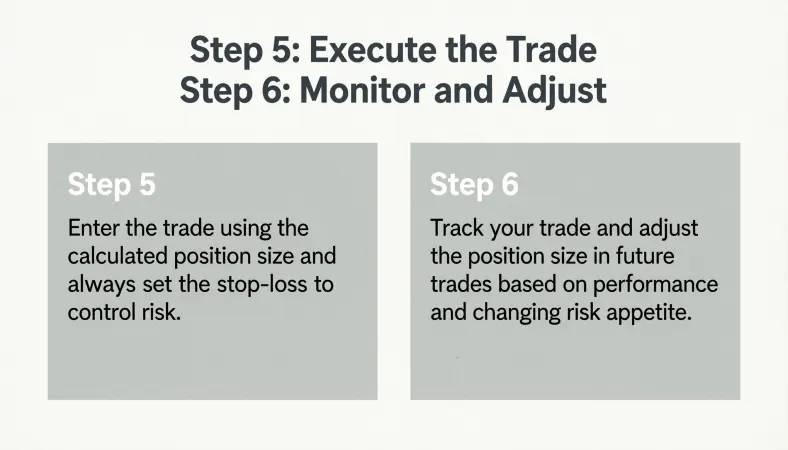
Step 5: Execute the Trade
Enter the trade using the calculated position size and always set the stop-loss to control risk.
Step 6: Monitor and Adjust
Track your trade and adjust the position size in future trades based on performance and changing risk appetite.
4. Benefits of Using a Position Size Calculator
- Protects Capital: Limits losses on individual trades.
- Reduces Emotional Decisions: Helps maintain discipline in volatile markets.
- Improves Risk-Reward Ratio: Ensures trades are sized proportionally to risk.
- Facilitates Strategy Testing: Easy to backtest different strategies with consistent position sizing.
- Optimizes Trade Allocation: Allows spreading risk across multiple trades without overexposure.
5. Disadvantages / Risks
- Overreliance: Solely depending on a calculator without market analysis can be risky.
- Incorrect Input: Wrong data input may lead to improper position sizing.
- Volatility Impact: Extreme market swings may require additional adjustments.
- Leverage Risk: Miscalculating leverage can cause larger-than-expected losses.
6. Common Mistakes to Avoid
- Ignoring Stop-Loss: Calculating position size without setting a stop-loss defeats the purpose.
- Exceeding Risk Percentage: Risking more than your plan can lead to account wipeouts.
- Changing Position Sizes Mid-Trade: Emotional changes mid-trade can ruin calculated risk.
- Not Considering Fees: Transaction fees can affect net profits and should be included in calculations.
- Neglecting Market Conditions: Position size must be adaptable to high-volatility periods.
7. FAQs
Q1: Can beginners use a position size calculator?
Yes, it is especially beneficial for beginners to learn disciplined risk management.
Q2: How much account balance should I risk per trade?
Most traders risk 1–2% of their account per trade, but it depends on your risk tolerance.
Q3: Does leverage affect position size calculation?
Yes, leverage increases both potential profits and losses, so adjust accordingly.
Q4: Can I use a position size calculator for all cryptocurrencies?
Yes, it works for Bitcoin, Ethereum, altcoins, or any tradable crypto.
Q5: What if the market is very volatile?
Reduce risk percentage and increase stop-loss distance to accommodate volatility.
Q6: Is it safe to trade without a position size calculator?
It is risky. Not calculating positions often leads to overexposure and large losses.
Q7: How often should I recalculate position sizes?
Recalculate before each trade and adjust based on your account size and risk tolerance.
8. Expert Tips & Bonus Points
- Always round down the number of coins to avoid exceeding your risk limit.
- Use calculators that include fees to get precise position sizes.
- Combine position sizing with technical analysis for higher accuracy.
- Avoid trading with emotions; let the calculator guide your risk.
- Continuously review past trades to improve your risk management strategy.
Conclusion
A position size calculator for crypto trading is an indispensable tool for traders of all levels. It transforms trading from guesswork into a disciplined, risk-managed strategy. By knowing exactly how much to invest in each trade, you protect your capital, reduce emotional stress, and increase the potential for consistent profits. Whether you are a beginner trying to avoid costly mistakes or an intermediate trader aiming to optimize your strategy, mastering position sizing is essential. Incorporating this tool into your trading routine ensures a sustainable approach, allowing you to navigate the volatile crypto market with confidence and precision. Make it a habit to calculate every trade, stick to your risk limits, and adapt your strategy as the market evolves, and you will significantly improve your chances of long-term trading success.
